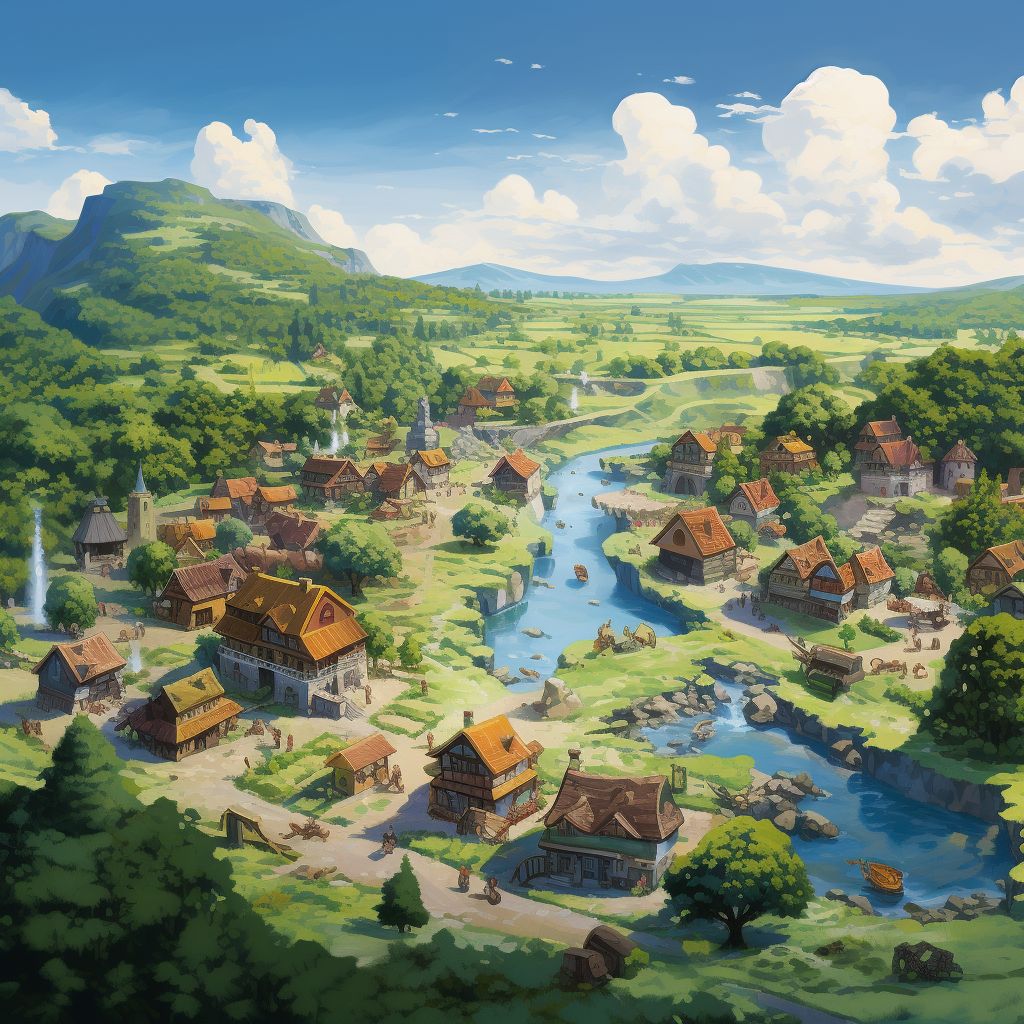
A story on how we came to define creation and trend.
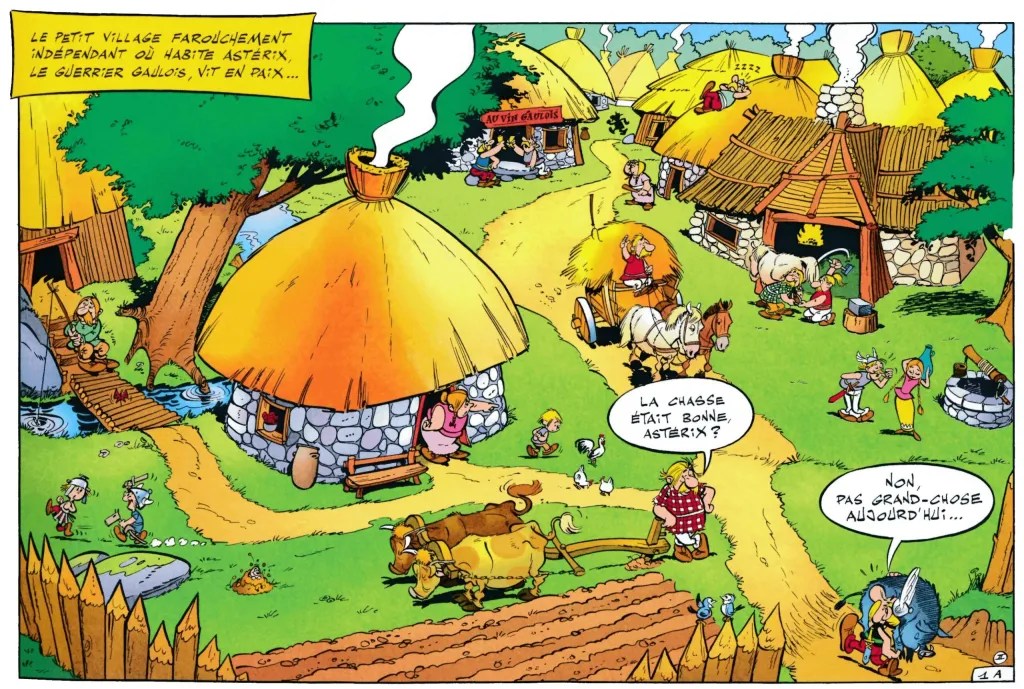
It’s 13th century Mongolia and you wake up to the sound of a Mongol envoy at your gates delivering a royal decree. The Mongol ruler Jengis has asked for immediate surrender and you just have one day to respond.
The emissary has also shared the story of your neighboring village razed to the ground when they refused.
There were other villages just like ours, and the Mongols don’t have any special interest other than progressing further west. Fearing their world would end under the ruthless plunderer, they agree to their terms.
Their writers, artists, and innovators will now work for the ruler, and they’ll be forever reduced to be tools to advance the empire.
Mongols took their books away, appropriated their paintings, and whatever made their village special is now a generic feature that the whole of empire uses without distinction.
AI feels like that to me.
Not because of the technology behemoth it has become lately, but because of the helplessless I feel without using it every day. Everyone’s running to be AI-first, every solution either made better or replaced by AI agents and pipelines, or at least blaming it on AI for every predicted cash crunch in a future quarter.
That’s what bothers me.
Luckily, your village has one day to decide. So you gather all your village elders and explore the routes you could take.
1. Complete surrender. Slop.
Wise men have gone silent today. They have heard stories of hoardes of swift Mongol horsemen wreaking havoc in every other village. Elders are filled with ‘told-you-so’ attitude with no other ideas to offer.
If you fail, there may not be a village tomorrow.
The fear of missing out on amnesty is what’s worrying them the most. Neighbors who bowed are still there, although more docile than ever before. People still live, but it’s been ages since we heard anything curious from them.
Everything they produce is for the Mongol cause. Lives depend on continuously appeasing and attuning to the empire’s will, and people have forgotten to do anything for themselves anymore.
You can spot if something’s created for the empire, as it clearly lacks the craftwork of the village people, which although wasn’t spectacular, remained distinct to those people.
Your village deserves to live, so everyone agrees to a complete surrender.
The aftermath.
Nothing’s different. You have more resources from the empire than ever before. The whole Mongol art is at your disposal, and far-reaching wisdom is readily available from governors who administer your village.
The only change though – everything seems more Mongol now.
You don’t have to come up with anything new like you used to. Whatever your mind puts to will, it can be made to fruition with the empire’s support. You flourish in making things that speed up your daily output, be that poetry, carpentry, or textile.
Earlier it took a while to make things for the village, but the village has drowned in empire-backed inventory, forcing many to change professions as their creativity is no longer needed.
Whatever you have to offer, the empire has an equivalent that’s cheaper.
You slowly forget your skills as their fruits are cheaply available now. And the market has started demanding things that are more mongol appropriate. It’s easier that way.
Soon, everything starts to look like everything else. You need only ask for a combination of whatever’s already available, and it’s made within no time. Artists are now advisers who tell the empire what to make, and writers are quick to use the mongol script as it’s more acceptable across the empire.
Mongol artisans from distant craft villages do make things that are representative of your village’s style. As time progresses, you fail to recognize what your village made and what you got from the empire.
You live on, but as a lesser version of yourself. With no real skill, passion, or dreams, other than that of the Mongol opportunity, your life ceases any meaning without the mongol occupation.
2. A strong coalition. Inspired
Instead of ceding power, you send them back with the best you have to offer in addition to a lot of praise for good measure. Your elders have decided not to fight, and welcome an era of Mongol partnership where both parties agree to help each other. Just one blocker: you must pay taxes to the Mongol empire for all the great services it brings you.
The emissary is pleased to hear this, as the village seems to be self sufficient and non-combative at this point. He also asks for all weapons to be surrendered to ensure there won’t be any future uprising.
They have suggested to optimize every occupation in the village with cheap labor, so creativity may flourish as usual and productivity rises above normal.
Authenticity is harder to spot now as more units of everything is available in the market.
Since the economy is winning, unique creations are rarely found, and even if you hone your skills, it can easily be replicated by the forced labor from the Mongolian order. For the first time ever, you witness ‘trends’ – something that spreads across the empire and fades, like a wave.
You can either follow it or create yours. But it will always be owned by the empire.
Consolidation of Creativity
The good news is you still get to work like you used to, but much of what made you good is no longer needed. Earlier you did everything by hand, asked people for help, and learned your craft with consistency and painstaking dedication.
Now you may focus on higher forms of art rather early in life.
Nuances are straightened without effort, while strenuous thought is limited to ideation. The mongols have truly ushered in an era of comfort and the need for higher order thinking.
But there is a heightened sense of urgency now. Your village is in good terms with the empire, but for how long?
What if another village makes better things? Wouldn’t you go out of favor and invite the empire’s wrath? Will they still support if we can’t keep up with the pace? Somehow the control over creation is not entirely upto us anymore.
Slowly but evidently, there is the empire’s influence everywhere.
No one goes against the empire, so everyone tries to appease and try to make whatever that sells. Creation has finally moved from the domain of crafrmanship to wealth generation.
If you pay more, your governor shall allocate more resources and workers for better output. Everyone is paying the governor for things that amuse them, and artisans distinguish themselves by paying more to make better products.
As time progresses, the only savants left in your village would be the ones who know how best to work with the empire to get things done.
Art would still combine others to make new art, and trends will rise and fade like waves on the beach, but originality takes a hit, as it doesn’t build wealth anymore.
Soon, your village becomes a mongolian village, fighting for relevance, in a sea of other villages who fight for the same thing.
3. In search of divine. Original
There is no winning this war. Honestly, there won’t be any if the enemy is that strong. Elders have all gathered, each sharing their encounter with the enemy to figure out the best way forward.
Some suggested mass exodus to the south, escaping the inevitable death and distress at the hands of the army. Some called for all out assault, which will render definite death but we’ll at least save our dignity.
No matter what we do, we won’t defeat them with numbers.
Our Shaman rose, his hands spread to the sky, proclaiming Tengri shall save us. Now Tengri is the sky god that Mongol Khans pray to. And they see it as bad omen to hurt anyone who worships their god.
The village carpenter jumped to his feet wasting no time, rushing out to bring out a wavy board of wood to create one of the best representations of a sky deity. The artist painted it in bluish white, depicting the morning sky, and the textile maker brought forth the softest silk gauze to adorn the deity.
The village sculptor created a podium to place the deity and the map drafter placed it in the direction of the wind to make sure it always waved with the morning wind.
Every villager chipped in their expertise to make it as lifelike as possible. Finally, citizens arranged incense and a hymn that glorified the mongol king’s long life.
The next day, they happily opened the gates for the army. Baffled by such an unexpected welcome, the General and soldiers were completely lost for words when they saw the finest version of their god residing in this small village.
Moved by the incense and hymns dedicated to long life of the Mongol families, the soldiers dared not to venture into violence. Elders greeted them, offered food and gifts, and invited the General for a discussion.
Quality prevails
The generals report back to the Khan explaining the divinity they saw in the small village. They describe how revered mongols were for these villagers, and how they were treated with respect, not fear.
The ruler decides not to attack the village as it’s no longer a threat to the empire. The king also understood that it was a ploy, but was moved by the ingenuity of this tiny village in spite of great odds of losing their homes.
In the end, the village prevailed and was never touched by any army thereafter.
The Analogy
It was never about Mongols.
Somewhere along the way, we decided to commoditise all human activity in favor of creating wealth. And when wealth decides quality of living, we doubled down on generating more of it.
Hobby, passion, living, career, each of these words have a an inherent relation to wealth. While hobbies are personal, it’s more favorable to have hobbies that can be monetised. Like having an unbankable passion could mean you’re wasting time, every human interest have long been associated with wealth some way or the other.
With AI coming in to the scene, what we previously thought to be original is no longer valuable. The definition of original and keeping something original has become much more difficult as we are surrounded by loookalikes that never saw even a fraction of original effort.
I’m still unsure where the world is headed. Perhaps this is the next industrial revolution and I’m selling horses.
I would still prefer the wise counsel of our village elders, before opening the gates to what’s next.

 Binny baburaj | (Work in progress)
Leave a comment